Introduction: A Legislative Leap into Digital Parenting
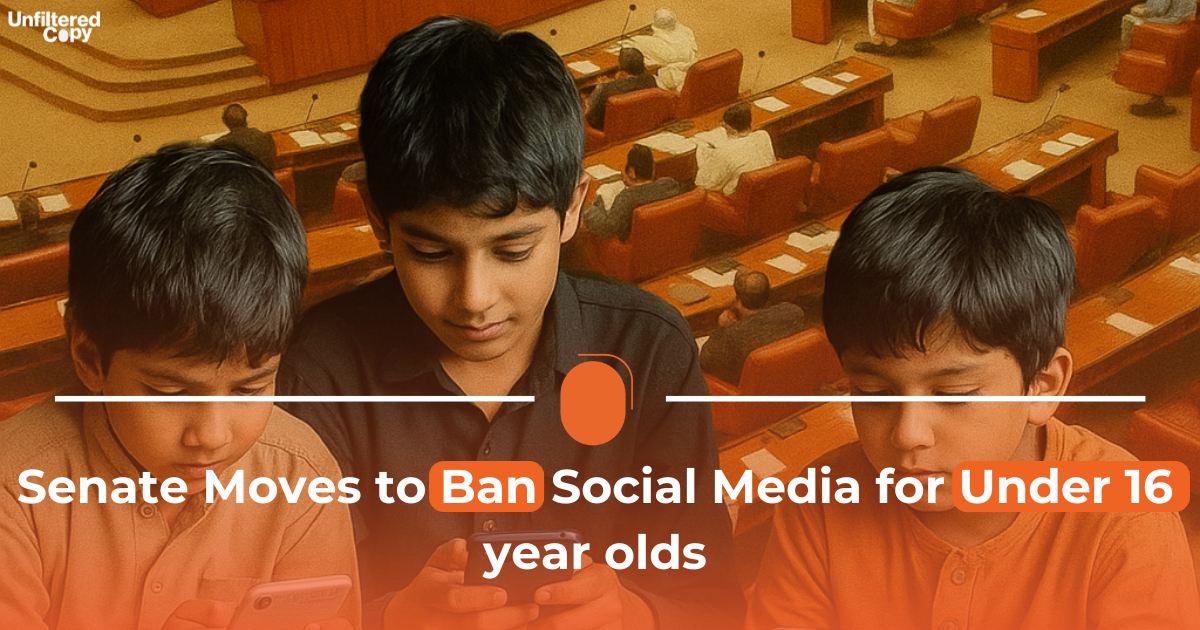
In a move that is set to redefine digital childhood in Pakistan, the Senate has introduced one of the most restrictive social media bills in the country’s history. The “Social Media (Age Restriction for Users) Bill 2025” proposes a blanket ban on social media account creation for anyone under the age of 16. Tabled by Senators Sarmad Ali and Masroor Ahsan, the legislation is framed as a necessary shield against the pervasive dangers of the online world. However, it also raises profound questions about enforcement, privacy, and the role of the state in digital upbringing.
The Bill’s Core: An Iron Fist for Digital Safety
The bill’s provisions are notably strict, aiming to deter violations through severe penalties:
- Platform Accountability: Social media companies like Meta (Facebook, Instagram), TikTok, and X (formerly Twitter) would be legally required to prevent underage access. Failure to do so could result in fines ranging from Rs. 50,000 to a staggering Rs. 5 million per violation.
- Individual Liability: The bill takes a unique step by criminalizing assistance. Any parent, relative, or friend who helps a minor circumvent the ban and create an account could face imprisonment of up to six months.
- Regulatory Power: The Pakistan Telecommunication Authority (PTA) is tasked with the enormous job of identifying and deleting existing accounts owned by minors. The authority would also be empowered to draft the specific rules and technical standards for compliance.
This three-pronged approach—targeting platforms, individuals, and granting strong regulatory power—signals the government’s intent to treat underage social media use as a serious infraction.
The Global Context: Following Australia and New Zealand
Proponents of the bill are quick to point out that Pakistan is not venturing into uncharted territory. Senator Sarmad Ali cited the need to align with international standards, specifically referencing legislation in Australia and New Zealand. In 2024, Australia passed a law requiring social media giants to take “reasonable steps” to prevent users under 16 from having accounts, one of the world’s toughest crackdowns at the time.
The framing is clear: this is about digital safety and catching up with global best practices. The argument is that if Western nations with advanced digital infrastructures see such bans as necessary for child welfare, then Pakistan, with its unique societal challenges, should follow suit—or even lead.
The Driving Rationale: Protection in a Perilous Digital Space
The senators behind the bill have articulated a protection-centric rationale focused on several key threats:
- Cyberbullying and Mental Health: With rising awareness of the link between social media use and anxiety, depression, and body image issues among teens, the bill seeks to create a digital “time-out.”
- Online Exploitation and Grooming: Pakistan has seen high-profile cases of child exploitation online. A ban is presented as a blunt but effective tool to reduce contact with predators.
- Exposure to Harmful Content: The unfiltered access to violent, extremist, or age-inappropriate content is a major concern for parents and policymakers alike.
- Digital Literacy Gap: The bill is coupled with stated aims to raise awareness among parents and children, suggesting a belief that a ban should coincide with education.
The Mountain of Challenges: Enforcement and Reality
While the intent may be rooted in protection, the path to implementation is fraught with obstacles:
- Age Verification: The global tech industry struggles with reliable, privacy-respecting age verification. Will Pakistan rely on simple date-of-birth entries (easily falsified) or mandate the submission of National ID or biometric data, raising massive privacy concerns?
- The Privacy Paradox: To enforce the ban effectively, platforms or the PTA would need to deeply verify users’ ages, potentially requiring intrusive data collection that contradicts the right to digital privacy.
- The Circumvention Industry: As seen with VPN use to access banned platforms, a lucrative market for fake IDs, adult-assisted accounts, and other workarounds would inevitably spring up, penalizing the less resourceful.
- Impact on Education & Connectivity: Social media is not just for entertainment; it’s a space for learning, skill development, and community for many digitally-savvy youth. A blanket ban could disproportionately affect those who use it productively.
- Parental Choice vs. State Mandate: The bill fundamentally shifts the responsibility of digital monitoring from parents to the state, a move that some may see as governmental overreach into family life.
A Broader Digital Rights Debate
This bill arrives amid an ongoing, tense conversation about internet freedoms in Pakistan. Critics may view it as another tool for control under the guise of protection, potentially used to further shrink digital spaces. Others will argue it’s a necessary, if imperfect, intervention in a landscape where parental controls and self-regulation have failed.
Conclusion: A Well-Intentioned Minefield
Pakistan’s proposed social media ban for under-16s is a watershed moment. It reflects a genuine, widespread anxiety about the impact of the digital world on children and a desire for decisive action. By mirroring global trends and proposing severe penalties, the government is making its priorities clear: safety first.
However, legislating in the digital realm is akin to trying to hold water in a sieve. The success of this bold vision will hinge not on the severity of its penalties, but on the practicality of its execution and the balance it strikes between safety, privacy, and the rights of the young. As the bill moves through the legislative process, it is sure to become a lightning rod for a national debate on what it means to grow up online in Pakistan.