Introduction: A Long-Awaited Green Light
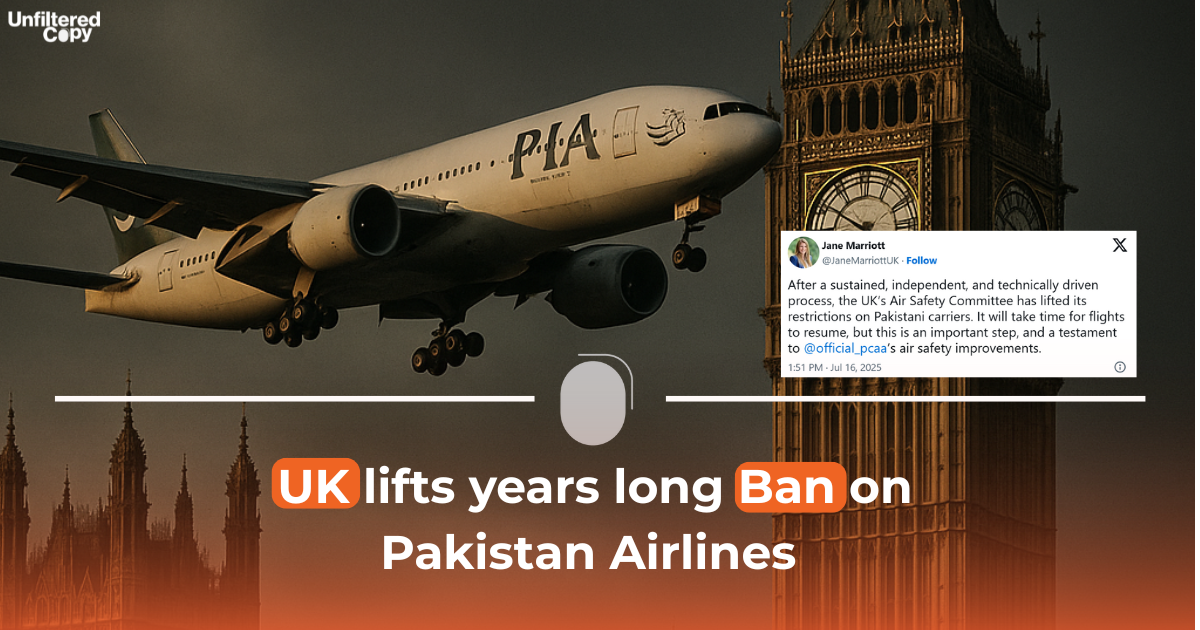
For over three years, the absence of direct flights between Pakistan and the United Kingdom has been more than an inconvenience—it’s been a symbol of a reputational crisis for Pakistan’s aviation industry. That chapter has now decisively closed. In a landmark announcement, the United Kingdom has removed Pakistan from its Air Safety List, effectively lifting a ban that had grounded Pakistan International Airlines (PIA) and other carriers from flying directly to British shores. This move not only reopens a vital travel corridor but also marks a hard-won restoration of trust in Pakistan’s aviation safety standards.
The Roots of the Grounding: A Scandal That Shook Confidence
The path to this moment began in July 2020, when the UK and European Union aviation authorities imposed a severe restriction. The trigger was a statement from Pakistan’s then-Aviation Minister, Ghulam Sarwar Khan, who, in the aftermath of a tragic PIA Airbus crash in Karachi, revealed that a significant number of pilots in the country were operating with fraudulent licenses. This “fake license scandal” triggered an immediate international safety review, leading to Pakistan’s placement on the UK’s Air Safety List in 2021. The fallout was swift and severe: PIA, the national flag carrier, was cut off from one of its most lucrative markets, facing an estimated annual revenue loss of 40 billion rupees (£144 million).
The Journey to Redemption: Collaboration and Reform
Reversal was never going to be quick. As highlighted in the British High Commission’s statement, the delisting is the result of “sustained technical cooperation” between the UK’s Air Safety Committee and Pakistan’s Civil Aviation Authority (PCAA). For three years, authorities on both sides worked meticulously to audit, review, and overhaul Pakistan’s aviation safety protocols to meet stringent international benchmarks. British High Commissioner Jane Marriott acknowledged this collaborative effort, stating, “I’m grateful to aviation experts in the UK and Pakistan for their collaborative work to meet international safety standards.”
What the Decision Means: Practical Implications and Next Steps
It’s crucial to understand that delisting is a permission to apply, not an immediate restart. Pakistani airlines must now undergo the standard process of securing individual Foreign Carrier Operator Permits from the UK Civil Aviation Authority. PIA has already signalled its intent, with a spokesperson confirming preparations are being finalised to resume UK flights “in the shortest possible time.” The initial plan is to restart with three weekly flights on the Islamabad-Manchester route, pending approval.
The airline has a strong commercial incentive to move quickly. UK routes to London, Manchester, and Birmingham have historically been among PIA’s most profitable. The carrier also retains valuable landing slots at London’s Heathrow Airport, assets that can now be reactivated. This development follows the European Union’s earlier decision to lift its similar ban, which already allowed PIA to resume flights to destinations like Paris.
A Boost for People, Trade, and a Struggling Airline
The impact transcends aviation logistics. This reopening is a socio-economic lifeline. It will dramatically ease travel for the estimated 1.6 million people of Pakistani origin living in the UK, for whom direct flights mean affordable fares, easier family visits, and cultural connectivity. Furthermore, it strengthens the £4.7 billion trade partnership between the two nations, where the UK is Pakistan’s third-largest trading partner. Easier business travel is a direct catalyst for enhanced commerce.
For PIA itself, this is a pivotal moment in its turbulent recent history. The news comes as the government is in the process of privatising the airline, having recently approved four groups to bid for a majority stake. The UK delisting, alongside recent internal reforms that led to PIA’s first operating profit in 21 years, significantly boosts its attractiveness to potential buyers as part of a broader IMF-mandated privatisation push.
Political Reckoning and a Look Ahead
The decision has ignited a political blame game in Islamabad. The current government, led by Prime Minister Shehbaz Sharif, has framed the delisting as a triumph of its diligent diplomacy over the previous administration’s negligence. Defence Minister Khawaja Asif labelled the original ban a “national embarrassment,” directly blaming the “reckless and irresponsible statements” of former minister Ghulam Sarwar Khan. PM Sharif, in a post on X, credited the achievement to three years of sustained effort under his leadership and praised his team for a “job well done.”
Conclusion: A New Ascent Begins
The UK’s decision to lift the air safety ban is more than a regulatory update; it is a vote of restored confidence. It concludes a painful period of isolation for Pakistan’s aviation sector and opens a new chapter of opportunity. While challenges remain—from final permit approvals to the long-term privatisation and modernisation of PIA—the runway is now clear. As High Commissioner Marriott poignantly noted, while flights won’t resume overnight, she now looks forward to the day she can once again “fly with a Pakistani airline.” For millions of passengers and a nation eager to reconnect with the world, that sentiment is powerfully shared.