Introduction: A Viral Claim Meets Official Denial
The world of international diplomacy is often driven by carefully choreographed announcements. So, when rumors began swirling on social media about a potential visit by US President Donald Trump to Pakistan this September, it immediately captured attention. The Pakistani Foreign Office’s swift response, however, poured cold water on the excitement. In a statement to Reuters, spokesperson Shafqat Ali Khan flatly stated, “There is no information about the US President’s visit to Pakistan.” This official denial, set against a backdrop of recent high-level engagement, creates a puzzling and intriguing diplomatic moment worth unpacking.
The Anatomy of the Rumor
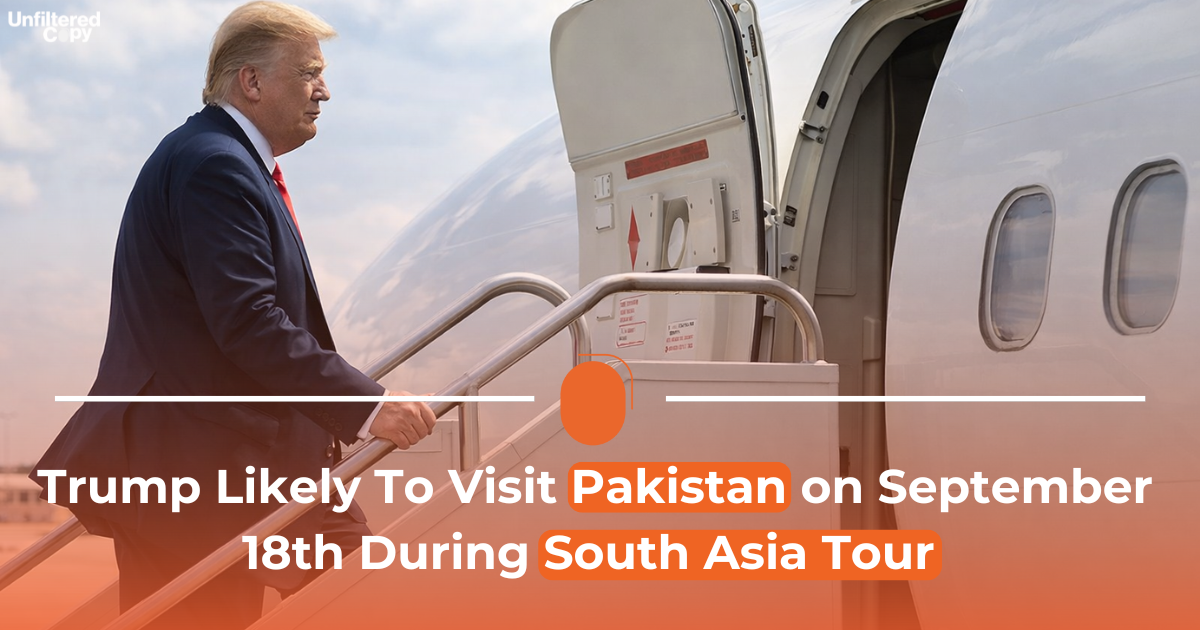
The speculation suggested President Trump would make a brief stopover in Pakistan around September 18, potentially as part of a broader South Asian tour that included India. The timing seemed plausible to some observers. US and British media had already reported Trump’s scheduled visit to the United Kingdom from September 17 to 19. Furthermore, India is due to host a summit of the Quad alliance (US, India, Australia, Japan) later this year, making a presidential trip to the region logical. The idea of a “brief stopover” in Pakistan—either en route to or from India—fed into a narrative of renewed US engagement in South Asian geopolitics.
The Weight of Recent History: A High-Profile Meeting
While the visit remains unconfirmed, the rumors did not emerge in a vacuum. They follow a significant and rare diplomatic event: a one-on-one meeting between President Trump and Pakistan’s Army Chief, Field Marshal Syed Asim Munir, at the White House. This meeting, followed by a luncheon in the Field Marshal’s honor, marked a notable elevation in bilateral dialogue.
The optics and statements from that encounter are crucial context. President Trump publicly emphasized Pakistan’s strategic importance, specifically noting, “Pakistan understands Iran better than us.” He also thanked the Pakistani leadership for its role in preventing regional tensions, particularly between Pakistan and India, from spiraling into conflict. Discussions reportedly touched on economic cooperation and potential trade agreements. This high-level warmth inevitably fueled speculation about the next logical step: a presidential visit.
Official Channels: Silence and “No Comment”
In contrast to the social media frenzy and the positive afterglow of the Munir-Trump meeting, official channels have been muted or non-committal. Following the Foreign Office’s denial, a US embassy spokesperson in Islamabad offered the standard diplomatic line: “We have nothing to announce.” The White House provided no confirmation on the President’s schedule, and Pakistan’s Information Ministry did not respond to requests for comment. This gap between vibrant speculation and official silence is a classic feature of pre-diplomatic maneuvering, where plans can be in flux or not yet finalized for public disclosure.
The Domestic Reaction: Hope and Political Point-Scoring
Within Pakistan, the mere possibility of a visit has sparked political reactions. Senior Pakistan Peoples Party (PPP) leader Sherry Rehman welcomed the reports, calling a potential visit a “positive development after a long gap.” She linked it to trade opportunities and recalled Trump’s past offers to mediate on the Kashmir dispute, a longstanding flashpoint with India. Her statement underscores how a US presidential visit is viewed domestically—not just as a diplomatic event, but as a potential catalyst for economic and geopolitical gains.
The Stakes: Why a Potential Visit Matters
A visit by President Trump would be historically significant. It would be the first by a sitting US President since George W. Bush’s trip in 2006—nearly two decades ago. Such a gap highlights the often-complex, transactional nature of the US-Pakistan relationship, which has seen periods of intense alliance and deep estrangement.
A presidential visit would signal a deliberate and high-stakes recalibration. It would affirm the “strategic importance” Trump recently cited, placing Pakistan firmly back on the top tier of US regional engagement. This is especially pertinent given the ongoing tensions in the Middle East involving Iran, where Pakistan is seen as a potential interlocutor, and the constant need for stability between Pakistan and India. Furthermore, it would elevate discussions on trade and economic partnership from behind-closed-doors talks to a publicly championed agenda.
Conclusion: Between Denial and Possibility
For now, the Pakistani Foreign Office’s stance is clear: there is no official knowledge of a visit. Yet, in diplomacy, denials do not always mean something isn’t being planned; they often mean it is not yet officially confirmed. The potent combination of social media speculation, a recent landmark meeting at the White House, and the evident geopolitical need for US engagement in South Asia keeps the possibility alive.
Whether the rumors prove prescient or merely premature, they have successfully highlighted the renewed activity in US-Pakistan relations. The official denial is the current headline, but the subtext is one of re-engagement. The coming weeks will reveal if this diplomatic buzz was merely noise or the first murmur of a major announcement, potentially heralding the end of a long presidential absence from Islamabad and a new chapter in a perpetually consequential relationship.