Introduction: A Province Under Water
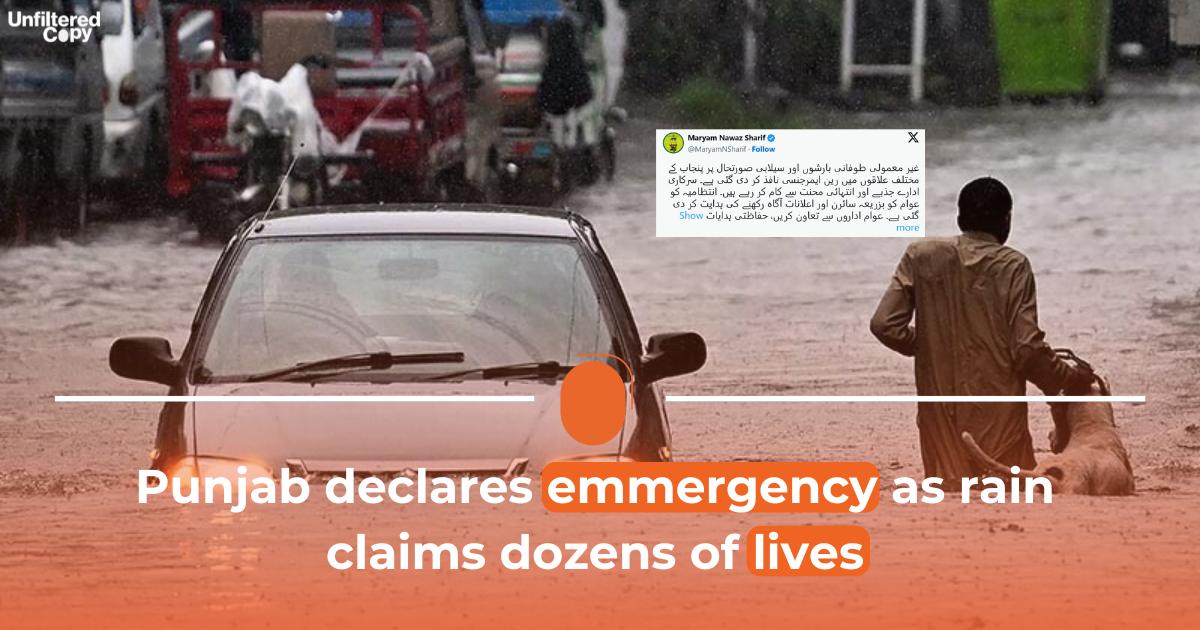
Punjab, Pakistan’s most populous province, is grappling with a devastating monsoon crisis. Following days of torrential downpours described as “unprecedented” by officials, a rain emergency has been declared, Section 144 imposed, and a grim toll has emerged: over 60 lives lost and 268 injured in just 24 hours. The province has transformed into a landscape of inundated villages, flooded city streets, and raging rivers, prompting a massive, multi-agency rescue operation to save thousands of trapped citizens.
The Trigger: Cloudbursts and Relentless Downpours
The catastrophe stems from an intense monsoon system forecasted earlier in the week. The situation turned extreme in districts like Chakwal, which experienced a suspected cloudburst, recording a staggering 400 millimetres of rain in just 10 hours. This volume of water in such a short period is beyond the capacity of natural and man-made drainage, leading to instant flash floods that swept through villages, damaged homes, and destroyed local mini-dams. Similarly, Jhelum and Rawalpindi faced severe flooding, with the Leh Nullah in Rawalpindi breaching danger levels and prompting urgent evacuation alerts.
The Human Toll and Rescue Scramble
The human cost is severe and visceral. Beyond the statistics are stories of survival and desperation. “Children were screaming for help, and women stood on rooftops, waving their shawls and begging to be rescued,” recounted a farmer from Gujrat. In Mandi Bahauddin, a 10-year-old boy drowned while bathing in rainwater—a tragic example of the dangers that prompted swift government action.
Responding to the crisis, a heroic rescue effort mobilised. The Pakistan Army, Rescue 1122, police, and civil defence are working in integrated teams. Using helicopters and hundreds of boats, they have evacuated scores of families from isolated villages. Punjab Rescue 1122 spokesperson Farooq Ahmad reported over 15,000 personnel and 800 boats on high alert across multiple districts, with operations focused on the worst-hit areas.
Government Response: Bans, Emergencies, and Long-Term Worries
The provincial and federal governments have activated emergency protocols:
- Section 144: A 45-day ban has been imposed across Punjab on bathing in stagnant rainwater or swimming/boating in rivers, canals, and dams to prevent drownings.
- Rain Emergency: Chief Minister Maryam Nawaz Sharif declared a state of emergency in affected districts, directing authorities to use sirens and announcements for public alerts.
- Federal Review: Prime Minister Shehbaz Sharif visited the National Disaster Management Authority (NDMA), directing the creation of a comprehensive, long-term disaster management plan. He underscored a stark climate injustice: “Pakistan contributes minimally to global greenhouse gas emissions but ranks among the top ten most climate-vulnerable countries.”
Analysis: A Recurring Nightmare and Systemic Challenges
This disaster is not an anomaly but part of a recurring, intensifying pattern. Monsoon floods annually test Pakistan’s infrastructure and disaster preparedness. Key issues highlighted include:
- Climate Vulnerability: Increased frequency of extreme weather events like cloudbursts.
- Urban Planning: Inadequate drainage in cities like Rawalpindi and Lahore leads to urban flooding.
- Infrastructure Resilience: The failure of privately-built mini-dams in Chakwal points to construction and regulation flaws.
- Public Awareness: Despite warnings, people often underestimate the danger of floodwaters, necessitating strict bans like Section 144.
The Road Ahead: Relief and Rehabilitation
The immediate focus remains on search-and-rescue and providing relief. CM Maryam Nawaz has promised a rehabilitation package for affected families. Relief centres with medical teams for humans and livestock have been established. However, with the NDMA forecasting more rain and the monsoon season ongoing, the threat is far from over.
The ultimate test will be in transitioning from emergency response to building climate-resilient infrastructure, improving early warning systems, and implementing robust urban planning to mitigate what is becoming an annual national trauma.
Conclusion: A Sobering Reminder of a Climate Crisis
Punjab’s current ordeal is a sobering snapshot of a nation on the front lines of the climate crisis. As rescue boats navigate what were once streets and farmers count lost cattle, the event reinforces the urgent need for adaptive strategies. While the bravery of rescuers provides hope, the recurring scale of loss demands that recovery efforts evolve into sustainable, forward-looking policies to protect vulnerable populations from the next, inevitable downpour.