Introduction: A Stamp of Closer Ties
In international diplomacy, few gestures are as symbolic and practical as the easing of travel restrictions. The recent announcement by Pakistan’s Foreign Minister, Ishaq Dar, that a mutual visa waiver for diplomatic and official passports with the United Arab Emirates (UAE) is now active at all airports marks more than just a procedural update. It is a tangible sign of warming relations and a strategic pivot aimed at enhancing bilateral cooperation between two key regional players.
The Announcement: From MoU to Reality
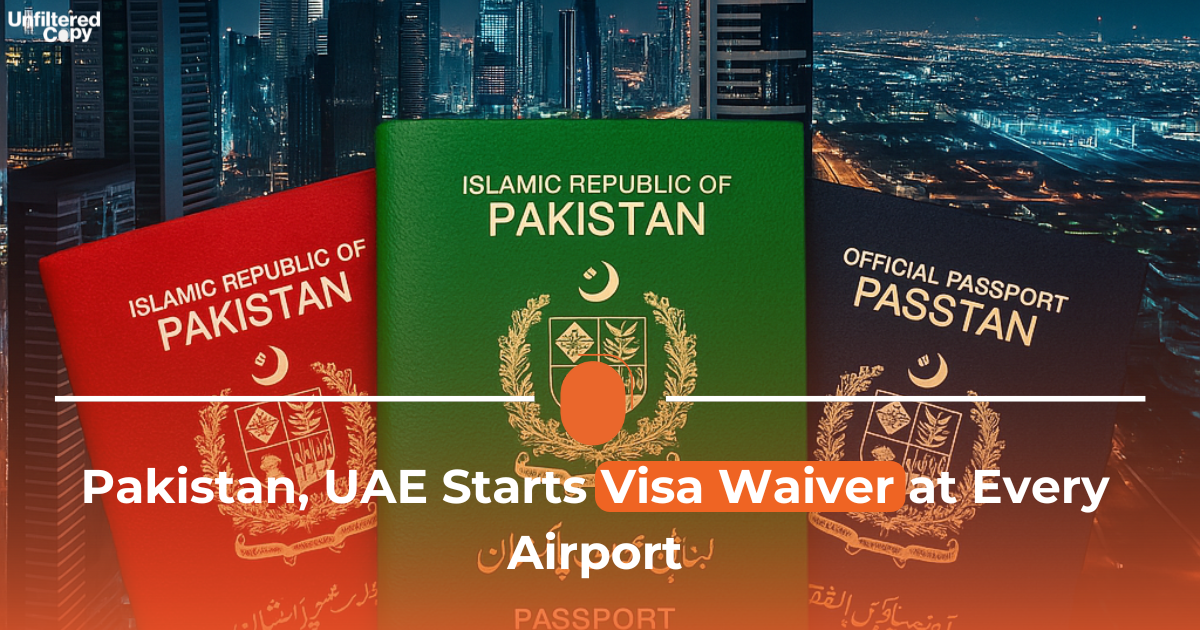
The waiver officially came into effect on July 25, 2025, at all airports in the UAE, with reciprocal measures activated simultaneously in Pakistan. This operationalization fulfills the terms of a Memorandum of Understanding (MoU) signed just a month earlier by Deputy PM Ishaq Dar and UAE Foreign Minister Sheikh Abdullah bin Zayed Al Nahyan. The agreement specifically covers holders of diplomatic and official passports, a category that includes government officials, military personnel on duty, and senior bureaucrats.
Minister Dar hailed the decision in a post on X, framing it as an achievement between “our two brotherly countries.” The 30-day gap between signing and activation is standard, allowing both nations’ immigration and aviation authorities to update their systems and inform relevant agencies.
The Immediate Impact: Smoother Official Channels
For the direct beneficiaries—diplomats and officials—the change is transformative. It eliminates the often time-consuming processes of visa applications, fees, and prior approvals for every official visit. This facilitates:
- Swift High-Level Dialogues: Emergency meetings, consultations, and diplomatic shuttles can be arranged with minimal lead time.
- Enhanced Operational Coordination: Officials from defense, trade, and investment ministries can travel more freely for technical discussions and project oversight.
- Strengthened Parliamentary Exchanges: Delegations from parliamentary committees can engage more readily, fostering legislative diplomacy.
This fluidity in official travel is the bedrock upon which more substantive agreements are built, as it allows for faster negotiation cycles and more frequent engagement.
The Strategic Context: Why This Matters Now
This visa waiver is not an isolated event but a piece in a larger puzzle of renewed Pakistan-UAE relations. It comes against a backdrop of several key developments:
- High-Level Visits: The meeting between Pakistani Interior Minister Mohsin Naqvi and UAE Interior Minister Lt Gen Sheikh Saif bin Zayed Al Nahyan earlier in July, where the latter promised “full support” in expediting visas for all Pakistani citizens, set a positive tone.
- Economic Imperatives: Pakistan is actively seeking foreign investment to stabilize its economy. The UAE is a major investor and a critical source of remittances. Facilitating official travel smoothes the path for investment talks and joint venture finalizations.
- Regional Diplomacy: Both nations share concerns about regional stability. Easier diplomatic travel enhances their ability to coordinate on issues related to Afghanistan, regional security, and the broader Middle East.
- The Gulf Re-engagement: Pakistan has been diligently working to strengthen ties with all Gulf Cooperation Council (GCC) countries. This agreement with the UAE, a leading GCC member, serves as a model and a confidence-building measure.
A Stepping Stone: Implications for General Travel
While the current waiver is limited to official passports, it creates a powerful precedent and establishes the technical and diplomatic framework for broader agreements. The UAE minister’s assurance on expediting general visas hints at this direction. For the millions of Pakistani expatriates in the UAE and families on both sides, this is a hopeful signal. It suggests that successful implementation of this official waiver could lead to discussions on easing tourist, business, or even long-term visit visas in the future, though such steps are more complex and sensitive.
Analysis: Reciprocity and Soft Power
The reciprocal nature of the waiver is crucial. It underscores a relationship moving towards greater parity and mutual respect. For Pakistan, it is a diplomatic win that showcases its ability to negotiate favorable terms with a powerful Gulf state. For the UAE, it reinforces its image as a global connector and a nation building strategic partnerships through pragmatic measures.
However, the real test lies in implementation. The efficiency and smoothness with which immigration officials on both sides honor this waiver will determine its success. Any incidents of hiccups or confusion at airports could undermine the goodwill the agreement intends to generate.
The Road Ahead: From Travel to Trade
The activation of this waiver is best viewed as an enabler, not an end goal. Its true value will be measured by what it facilitates:
- Will it lead to a surge in joint cabinet-level meetings?
- Will it accelerate the signing of pending agreements in energy, agriculture, and digital infrastructure?
- Can it pave the way for a more comprehensive economic partnership treaty?
The channels are now more open. The responsibility falls on the governments, trade bodies, and business communities of both nations to leverage this new accessibility for concrete outcomes.
Conclusion: A Welcome Move in a Complex Relationship
The Pakistan-UAE visa waiver for official passports is a clear, positive development. It reduces friction in state-to-state interaction and signals a shared desire for a closer, more efficient partnership. In the often-opaque world of international relations, such tangible steps are vital. They build trust incrementally. While the average citizen may not yet feel its direct impact, this agreement lays the administrative and diplomatic groundwork for a more interconnected future, where collaboration between Pakistan and the UAE can flourish with fewer barriers. The journey towards deeper integration has, quite literally, been granted a faster lane.